

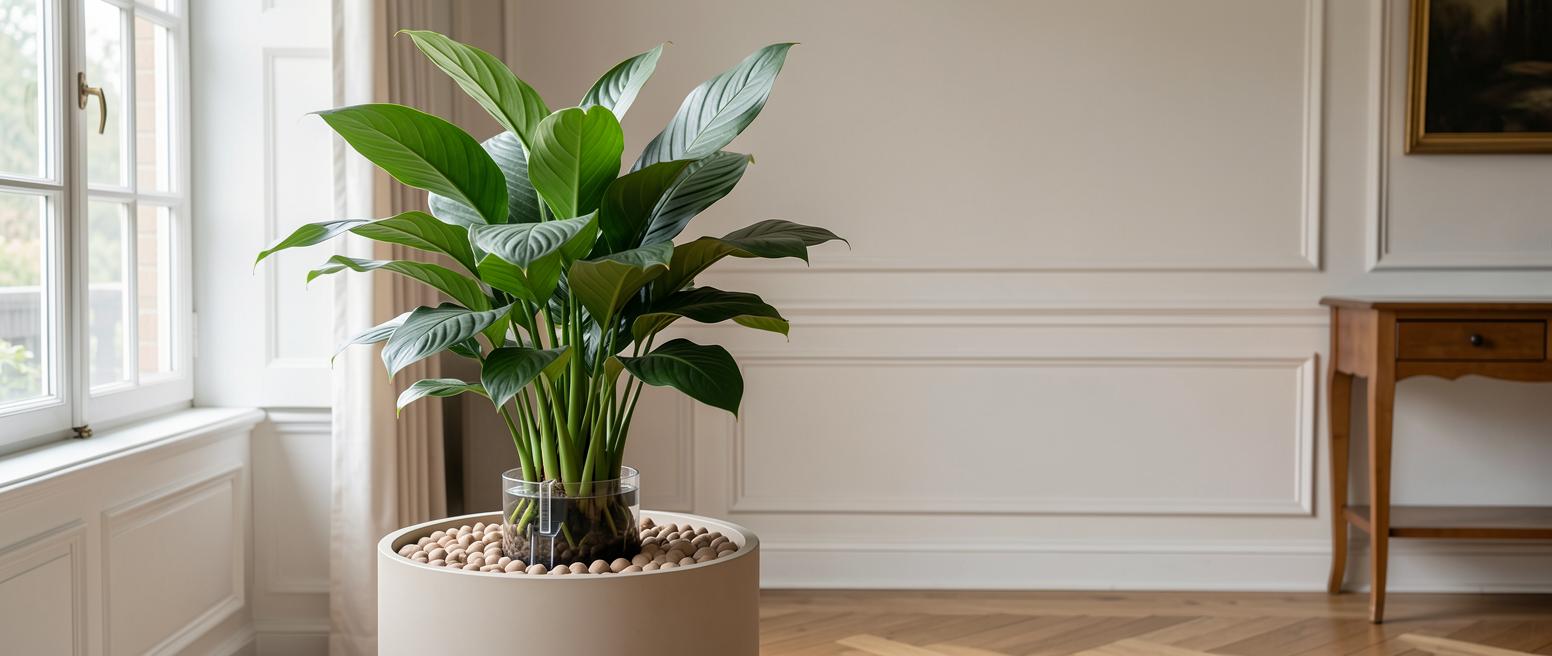
Most houseplants don't die from neglect, but from intuitive watering. Hydroponics takes the guesswork out of it: the meter tells you when, and the meter tells you when to stop.
Hydroponics in brief
Watering is the most difficult part of keeping plants for many people. Too little and the plant dries out, too much and the roots suffocate. Hydroponics solves this by making the water visible, so you no longer have to guess how wet the pot is inside.
What is hydroponics

In hydroponics, the plant is not in potting soil, but in a moisture-retaining substrate such as clay pebbles or Vulcaponic. At the bottom of the pot, there is a layer of water from which the roots drink.
A water level indicator in the pot shows how much water is left. The meter tells you when to water and, just as importantly, when you have given enough.
The system consists of two pots: an inner pot with holes in which the plant and the substrate are placed, and a closed outer pot or planter in which the water remains. Often, there is an insert sleeve between them, so you can lift the plant out in one go.
The benefits
- Less frequent watering. Instead of every week, you'll be dealing with it, on average, once every two to three weeks.
- Longer lifespan. The plant consistently receives the correct amount of moisture, without peaks and valleys.
- The soil does not acidify. Substrate does not break down like potting soil does.
- Hardly any pests. Without organic potting soil, there is little for fungus gnats and other unwanted visitors to thrive on.
- Nutrients are automatically absorbed. You administer them through the water, in the correct proportion.
What you need
To start with hydroponics, you need six things:
- A water level indicator
- Clay pebbles or another substrate
- An insert sleeve or inner pot
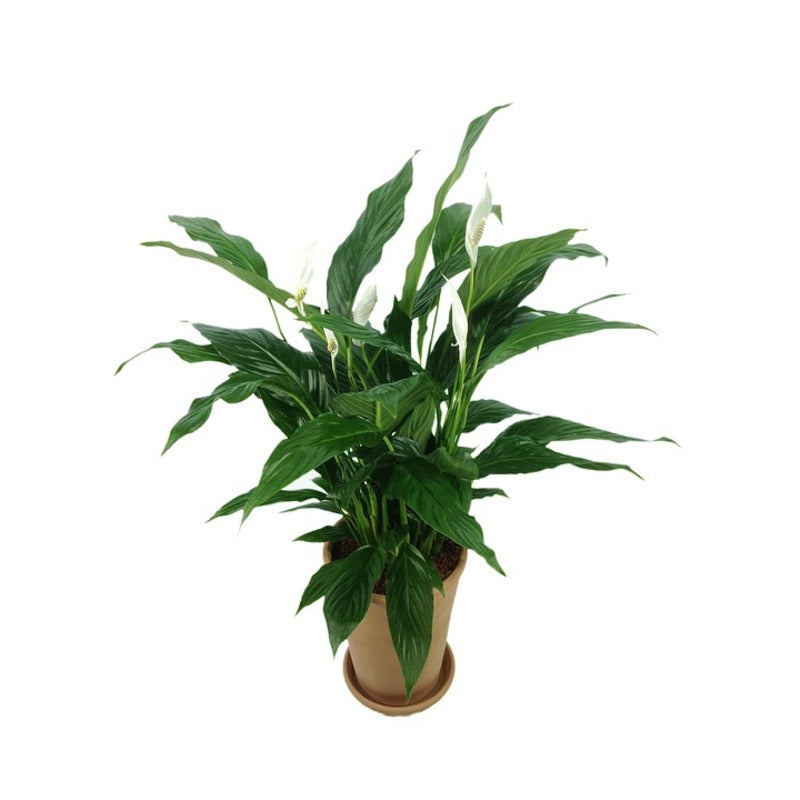
- A plant that has been cultivated for hydroponics
- Hydroponic plant food
- A waterproof planter or outer pot
Reading the water level indicator

The water level indicator works with a red dipstick that moves with the water level in the outer pot. The more water, the higher the stick. There are three indications on the meter.
- Min: there is no more water at the bottom of the pot. This is the time to water.
- Opt: the optimal level. When watering, fill up to here and no further.
- Max: the highest permissible level. Only to be used as an exception.
Do not refill as long as the dipstick is still above 'min'. Let the level drop completely first. If you don't, the roots will be permanently submerged and will still rot.
Going away for two weeks? Then you may fill up to 'max' once. Tilt the pot slightly to check if the meter is still rising; if it's stuck, it means it's jammed.
Watering in practice
The rhythm is simple: wait until 'min', then refill to 'opt'. Between these two moments, there is a short dry period during which the roots absorb oxygen. This pause is not a defect, but precisely the point on which the system operates.
If you see wilting or yellow leaves while the meter has been at 'min' for a longer period, the plant has simply waited too long. If the meter consistently reads high and the leaves still discolour, it is almost always due to overwatering.
Vulcaponic and other substrates
Clay pebbles are the best-known substrate, but Vulcaponic is a newer development that we are happy to recommend. It is a fine volcanic grit that works like cat litter: it absorbs water and gradually releases it.
Vulcaponic draws moisture up to about 30 centimetres, preventing water from pooling around the roots. This significantly reduces the risk of root rot.

Because the substrate remains airy, the roots receive more oxygen. As a result, plants grow noticeably better than in a substrate that compacts.
Nutrition
Substrate itself contains no nutrients. You provide everything the plant needs through the water. Use special hydroponic plant food for this and follow the dosage on the packaging; regular plant food is too concentrated and can damage the roots.
If the plant hasn't grown for months while the water meter is working properly, a lack of nutrients is the most likely cause.
Repotting
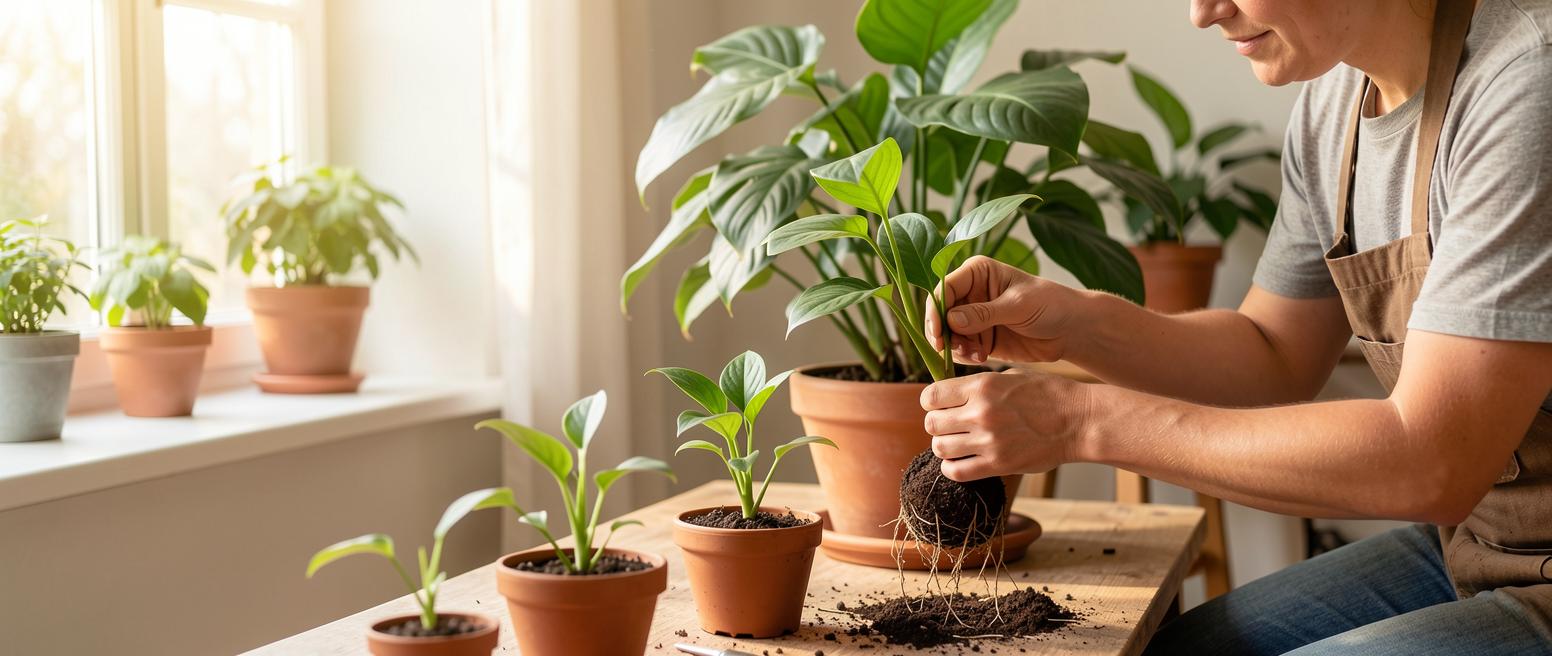
Hydroponic plants rarely need repotting. Only do so when the inner pot is full of roots and roots are growing out through the holes.
- Do not remove the plant from the inner pot; place the entire inner pot into a larger inner pot.
- Fill the space between them with fresh substrate.
- Check that the water level indicator can still move freely after repotting.
- Water a little less for the first few weeks, until the roots have reached the new substrate.
Which plants are suitable

Not every plant can have its roots in water. True hydroponic plants are specially cultivated for this: their root system is accustomed to water from the start and differs from that of a plant grown in potting soil.
Do you want to convert a plant that was not cultivated as a hydroponic plant? Then choose Vulcaponic. This substrate retains moisture without the roots standing in water, making it much more forgiving.
Are you unsure about your plant?
Are you unsure if your plant is suitable, or can't you figure it out with the water level indicator? Send us a photo and we'll take a look with you. Water level indicators, clay pebbles, Vulcaponic, and plant food can be found in our webshop.
Ask your question
Share:
Palm Trees and Mediterranean Plants Signpost
Information about pruning plants