

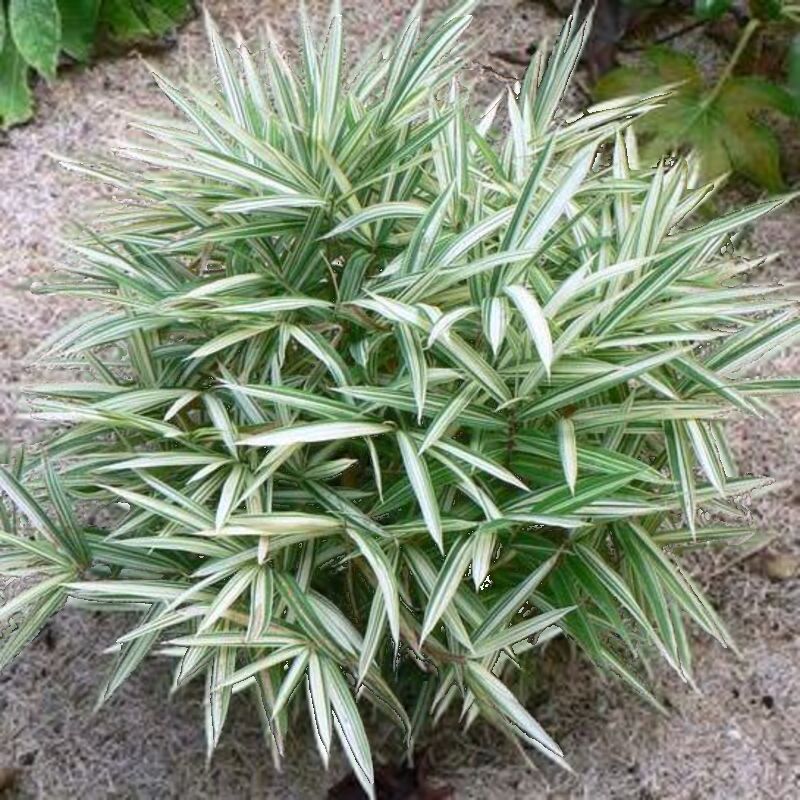
The Pleioblastus Variegatus, also known as Dwarf Bamboo, is a charming addition to any garden due to its compact and low-growing habit. With its unique leaves that combine narrow creamy white stripes with olive green stems, this evergreen bamboo creates beautiful accents in any outdoor space. This plant thrives in both full sun and lightly shaded areas and requires little maintenance, making it an ideal choice for gardeners looking for an evergreen and decorative addition. The Pleioblastus Variegatus is also winter hardy and can be used as a ground cover or specimen plant, making it versatile in a variety of garden designs. With its vibrant appearance and structural form, this bamboo adds a touch of natural beauty to any outdoor setting.

The Pleioblastus variegatus - Dwarf Bamboo - Rampant likes a sip of water
The Pleioblastus Variegatus, or Dwarf Bamboo, has a slight preference for moist soil, but also thrives in slightly moist conditions. It is important to keep the soil slightly moist, especially during dry periods. Regular watering is essential for maintaining healthy and lush growth. Make sure that the plant does not experience waterlogging, so ensure good drainage. In the summer months it may be necessary to water more often, especially in warm weather. It is advisable to water in the morning or evening to minimize evaporation and give the plant the chance to absorb the moisture properly. By keeping a close eye on the water needs of the Pleioblastus Variegatus and providing it with the right amount of water on time, this beautiful dwarf bamboo will thrive optimally in your garden.
Summer
During the summer it is very important that this plant, when it is outside, is kept well moist. Especially during the warm days it should be watered every day, so that the root ball is well moist. On the less warm days this can sometimes be skipped for a few days. This is so important because otherwise the plant 'drinks' moisture from its leaves, causing it to become dry and eventually die. This should of course be prevented.
Winter
When winter is just around the corner, the rules are reversed! If the Pleioblastus variegatus - Dwarf Bamboo - Rampant is outside, it must remain dry so that the moisture does not freeze and damage the plant. The Pleioblastus variegatus - Dwarf Bamboo - Rampant does not suffer from a dry root ball during this period, it is in a kind of hibernation!
When the plant is kept indoors during the winter it should be kept slightly moist, so not soaking wet (as in summer), but just so that the root ball feels slightly damp.
General rules
In addition to the above guidelines, it is best to follow these rules:
First, give the plant a little water. If the soil is dry within 2 days, it means it needs a little more water. Adjust the amount of water until it still feels slightly moist between 2 and 5 days after watering, and almost dry after 5 days. If it feels very wet after 5 days, wait until it is almost dry and water again, but reduce the amount.

Spraying
We recommend that you spray the Pleioblastus variegatus - Dwarf Bamboo - Rampant with water weekly. However, we do not recommend this during hot summer days, so that you do it either in the evening after sunset, or on days when the sun shines little, because the water droplets bundle the incoming sunlight into small points that become very hot. These cause the leaves to dry out, or even burn through.
Aside from the detrimental effect of bright sunlight on wet leaves, misting has beneficial effects for your Pleioblastus variegatus - Dwarf Bamboo - Rampant . Namely, it removes dust from the leaves, allowing them to better absorb sunlight and appear more beautiful, and it deters certain types of pests.

Where is the best place to place the Pleioblastus variegatus - Dwarf Bamboo - Rampant?
The Pleioblastus Variegatus, or Dwarf Bamboo, thrives best in a sunny to lightly shaded location. This charming garden hero prefers full sun, but can also thrive in semi-shaded conditions. In terms of temperature, this plant is fairly hardy and can withstand temperatures down to -20°C. However, it is advisable to protect the bamboo from icy winds to keep the leaves beautiful and healthy. In terms of humidity, the Pleioblastus Variegatus prefers a moist, well-drained soil. As a ground cover or planted in a container, this dwarf bamboo will flourish gratefully in your garden or outdoor space, with minimal effort on your part.
Light
The Pleioblastus variegatus - Dwarf Bamboo - Rampant is a plant that likes a fair amount of sunlight. It likes to be in full sun or half shade, taking in all the light. Is it indoors? Then it wants a spot near a window or where light does come in. The Pleioblastus variegatus - Dwarf Bamboo - Rampant requires at least 1 to 3 hours of direct sunlight per day
Wind
Make sure that the Pleioblastus variegatus - Dwarf Bamboo - Rampant experiences as little wind as possible. Wind can damage the leaves, causing them to die off more quickly. A little wind is no problem.
Temperature requirements
Minimum temperature during the day: -20 ℃
At night minimum -20 ℃

Repotting, why and when?
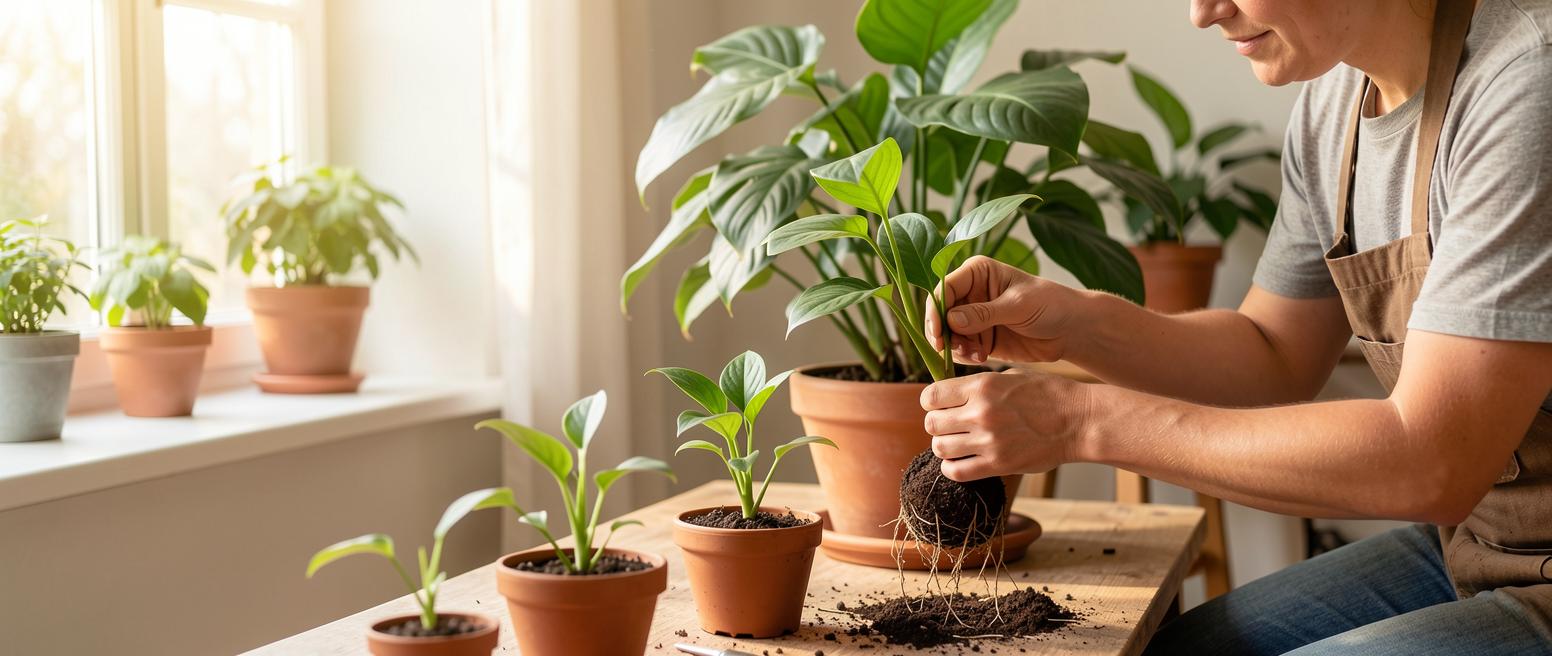
Repotting the Pleioblastus Variegatus is an important aspect of care to ensure that this dwarf bamboo remains healthy and happy. It is advisable to repot the plant every few years, especially when the roots are clearly visible at the surface or coming out of the drainage holes of the pot.
When you notice that the growth of your Pleioblastus Variegatus is slowing down or the plant is looking tired, it is probably time to repot it into a larger pot or move it to a new location in the garden. When repotting, it is important to ensure good drainage in the new pot and to use fresh potting soil to provide the bamboo with sufficient nutrients. Also make sure to water the plant sufficiently after repotting and give it time to acclimatize to its new environment. A healthy repotted Pleioblastus Variegatus will reward you with its beautiful growth and vibrant appearance in your green oasis.
General rules
When the Pleioblastus variegatus - Dwarf Bamboo - Proliferating has rooted (often every 2-3 years) we recommend repotting it in the spring. If it is always indoors, it does not matter. If it is outdoors, it is not a problem to repot it in the summer, but we advise against it in the autumn and winter, because it will not grow and root optimally then. This can make it somewhat weak, and possibly suffer damage from frost.
When you choose to repot your Pleioblastus variegatus - Dwarf Bamboo - Proliferating, choose a nice pot that is twice the size of the root ball. Place a layer of hydro grains at the bottom of the new pot for better moisture control. It will be grateful for that. Fill this layer with some Mediterranean potting soil. This type of soil ensures that the Pleioblastus variegatus - Dwarf Bamboo - Proliferating roots optimally and is fed. Then you can place the root ball on the ground. Make sure that the top of the root ball is slightly below the edge of the pot. Aim for a difference of 2 to 6 cm. This difference ensures that the water does not run off the root ball when you water it.
Every year you should replace the top layer of soil, because it hardens and 'wears out' in nutrients, due to regular watering and because of the sunlight on the upper edge of the root ball.
Diseases and pests
Diseases and pests can unfortunately sometimes occur in plants, including the Pleioblastus Variegatus, also known as the Dwarf Bamboo. Fortunately, this plant is generally quite resistant and does not often suffer from problems. However, it is good to be aware of possible diseases and pests, so that you can intervene quickly if necessary.
A common problem with bamboo is the presence of aphids. These small insects can multiply quickly and attack the leaves of the plant. To combat aphids, you can use environmentally friendly methods such as spraying the plant with a mixture of water and soap, or by attracting natural enemies such as ladybugs. It is important to check the plant regularly and take action if necessary.
Another problem that can occur with bamboo is fungal diseases, such as rust or powdery mildew. These diseases often thrive in humid conditions, so it is important to ensure that the plant has sufficient air circulation and that the leaves do not remain wet for too long. At the first signs of fungal diseases, it is advisable to remove affected parts of the plant and treat the plant with a fungicide that is suitable for bamboo.
Finally, snails can sometimes be a problem for the Pleioblastus Variegatus. These voracious creatures can cause damage to the leaves of the plant, especially at night. To combat snails, you can use natural remedies such as placing snail bait boxes or sprinkling coffee grounds around the plant, since snails hate the caffeine in coffee.
It is always advisable to take preventative measures to promote the health of the plant, such as regularly checking for pests and ensuring good growing conditions. By taking good care of your plant and intervening quickly when signs of problems appear, you can ensure that the Pleioblastus Variegatus continues to thrive and flourish in your garden. With the right attention and care, this charming Dwarf Bamboo can be a beautiful addition to your green oasis for many years to come.
Share:
Fargesia 'Jiuzhaigou' - Non-spreading Bamboo
Phyllostachys aureosulcata 'Spectabilis' - Yellow Bamboo